Welcome to your all-in-one destination for the sports that move millions. From the roar of football stadiums to the crack of a cricket bat and the thunder of a volleyball spike — we baring you live scores, breaking news, match highlights, and in-depth stats the moment they happen. Football. Cricket. Volleyball. One platform. Zero compromise.

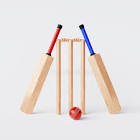
Cricket

Football

Volleyball
Cricket is a bat-and-ball game played between two teams of 11 players on a large oval field. At the centre is a 22-yard pitch with wickets (three stumps and two bails) at each end. One team bats, trying to score runs by hitting the ball and running between the wickets, while the other team bowls and fields, aiming to restrict runs and dismiss batters by bowling, catching, or running them out. The team with the most runs wins.
Football, also known as soccer, is a team sport played between two teams of 11 players each on a rectangular field with a goal at both ends. The objective is to score by kicking or heading the ball into the opponent’s goal, while players (except the goalkeeper in their own penalty area) cannot use their hands or arms. Matches last 90 minutes (split into two 45-minute halves), and the team with the most goals wins .
Volleyball is a fast-paced team sport with two teams of six players separated by a net. Teams score by hitting the ball over the net so it lands in the opponent’s court, using up to three touches per side. Matches are best-of-five sets, with sets won by reaching 25 points (15 in the decider), winning by at least two.
CRICKET
Number of Players
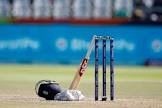
- Each team has exactly 11 players.
- When batting: only 2 batsmen are on the field at a time.
- When bowling/fielding: all 11 players of the bowling team are on the field (1 bowler, 1 wicketkeeper, 9 fielders).
Three Main Formats
- Test Cricket – 5 days, unlimited overs, white clothing.
- One-Day International (ODI) – 50 overs per team.
- T20 – 20 overs per team (fastest and most popular).
All Important Rules
The Pitch
- 22 yards (20.12 meters) long.
- Three wooden stumps at each end with two bails on top (called wickets).
Bowling Rules
- The bowler must bowl the ball with a straight arm.
- The ball must bounce once before reaching the batsman (in all formats).
- One over = 6 legal deliveries.
- If the bowler’s front foot goes beyond the crease → No-ball (1 extra run + free hit in ODI/T20).
- Wide ball = extra run if ball is too wide to play.
How Runs are Scored
- Batsmen run between the wickets → 1 run per successful run.
- Ball touches the boundary rope after hitting the ground → 4 runs.
- Ball flies over the boundary without touching the ground → 6 runs.
- Byes & Leg-byes = runs without bat touching the ball.
10 Ways a Batsman Can Get Out
- Bowled – ball hits the stumps.
- Caught – fielder catches the ball before it touches the ground.
- LBW (Leg Before Wicket) – ball hits the pad and would have hit the stumps.
- Run Out – stumps broken while batsman is outside the crease while running.
- Stumped – wicketkeeper breaks stumps when batsman is out of crease (only off spinner/fast bowler).
- Hit Wicket – batsman breaks his own stumps with bat or body.
- Handled the Ball – batsman touches ball with hand (rare).
- Hit the Ball Twice – intentionally hits ball twice (rare).
- Obstructing the Field – batsman blocks fielder on purpose.
- Timed Out – new batsman takes more than 3 minutes to come in (very rare).
Innings
- Test: 4 innings (each team bats twice).
- ODI & T20: 2 innings (one team bats first, the other chases).
Powerplay (ODI & T20)
- First 6–10 overs: only 2 fielders allowed outside the 30-yard circle (more catching chances).
DRS (Decision Review System)
- Each team gets 1–2 reviews per innings to challenge umpire decisions (using technology: Hawk-Eye, UltraEdge, etc.).
Winning the Match
- Score more runs than the opponent, OR
- Bowl the opponent out for fewer runs (all out = 10 wickets down)
- If rain stops play, Duckworth-Lewis-Stern method calculates a new target.
Football

Where Is It Played?
Football can be played almost anywhere, but at a professional level, it’s on a rectangular field (pitch) made of grass or artificial turf. The field length is 90-120 meters, and width is 45-90 meters. Goals are at both ends. It can be played in stadiums, parks, streets, or indoor halls. Around the world, it’s featured in leagues like Europe’s Premier League and La Liga, South America’s Copa Libertadores, and international events like the FIFA World Cup.
Basic Rules
Football’s rules are simple yet strict, defined in FIFA’s “Laws of the Game.” Here are some key ones:
- Match Duration: A match lasts 90 minutes, divided into two halves of 45 minutes each, plus injury time. Extra time and penalties can occur in case of a tie.
- Players and Teams: Each team has 11 players, including one goalkeeper. Substitutes are allowed (usually 3-5 per match).
- Ball in Play: The ball is moved by kicking. If it goes out of bounds, it’s restarted with a throw-in, goal kick, or corner kick.
- Scoring: A goal is scored when the entire ball crosses the goal line. Only the goalkeeper can handle the ball with hands in their penalty area.
- Fouls and Penalties: Fouls like tripping, pushing, or handball result in a free kick or penalty kick. Serious fouls can earn a yellow card (warning) or red card (ejection).
- Offside Rule: An attacking player is offside if they’re ahead of the opponent’s last defender (excluding the goalkeeper) when receiving the ball, unless in their own half.
- Other Rules: No diving (faking fouls), no dangerous play, and the referee’s decision is final. VAR (Video Assistant Referee) is used in modern games to review fouls.
Volleyball

Volleyball is a dynamic team sport that originated in the United States in 1895, invented by William G. Morgan as a less physically demanding alternative to basketball. Played by two teams of six players each on a rectangular court divided by a net, the objective is to score points by grounding the ball on the opponent’s side while preventing them from doing the same. It’s known for its fast-paced rallies, requiring agility, coordination, and teamwork, and has grown into one of the most popular sports globally, with professional leagues, Olympic events, and recreational play worldwide.
Where Is It Played?
Volleyball can be enjoyed indoors or outdoors. Indoor volleyball is typically on a hard court measuring 18 meters long by 9 meters wide, with the net at 2.43 meters high for men and 2.24 meters for women. Beach volleyball, a variant, is played on sand with teams of two, popularized by events like the Olympics and FIVB World Tour. It’s accessible almost anywhere—from gyms and beaches to parks and backyards—and is featured in major competitions like the FIVB Volleyball World Championships, NCAA college leagues in the US, and professional circuits such as Italy’s Serie A or Brazil’s Superliga.
Basic Rules
Volleyball rules are governed by the Fédération Internationale de Volleyball (FIVB). Here’s a breakdown of the key ones:
- Match Structure: A match is best-of-five sets (or best-of-three in some formats). Each set is played to 25 points (15 for the fifth set), with a team needing a two-point lead to win.
- Players and Teams: Six players per team on the court, with up to six substitutes. Positions include setters, hitters, blockers, and liberos (defensive specialists who can’t attack above the net).
- Serving and Rotation: Play starts with a serve from behind the end line. Teams rotate clockwise after winning a point when serving. The ball must be hit over the net within three contacts (bump, set, spike).
- Scoring: A point is scored on every rally, regardless of who serves (rally scoring system). Points come from the ball hitting the floor in the opponent’s court, faults like net touches, or out-of-bounds hits.
- Fouls and Violations: Common faults include carrying or lifting the ball, double hits, net violations, or foot faults on serve. Penalties can result in point awards or side-outs.
- Other Rules: The ball can be played off the net (except on serve), and blocks don’t count as one of the three touches. In beach volleyball, rules are similar but with no substitutions and open-hand tips allowed.